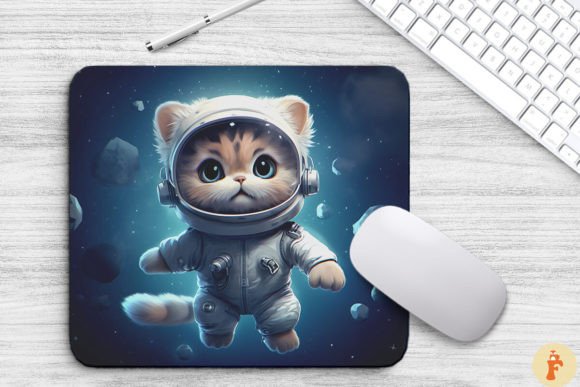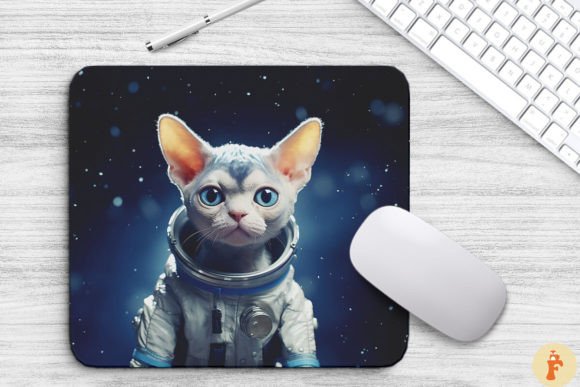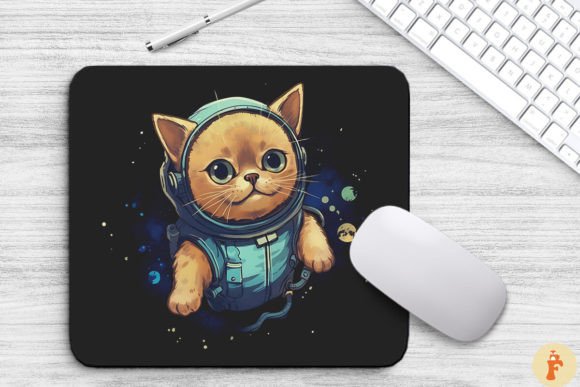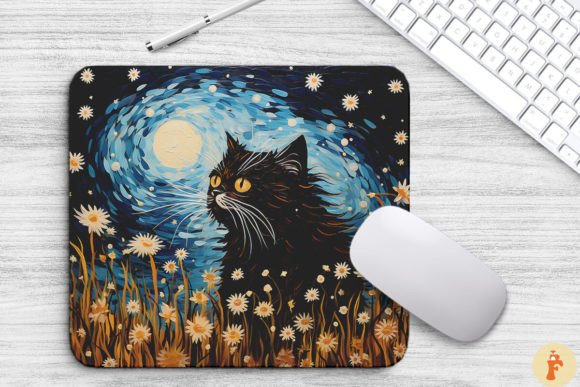
Starry Night Persian Cat Mouse Pad
A Designer’s First Glance: Whimsy with Quiet Confidence
When I opened the Starry Night Persian Cat Mouse Pad file—just that single PNG—I paused. Not because it’s flashy, but because it breathes atmosphere: deep indigo gradients, soft constellations, and a serene Persian cat curled like a crescent moon beneath them. It doesn’t shout. It invites. As a designer who’s stitched hundreds of custom pieces—from baby onesies to boutique aprons—I immediately saw its quiet strength: this isn’t a standalone motif. It’s a backdrop. A mood-setter. A subtle signature for products where elegance meets gentle playfulness.
Where This Design Truly Shines (and Where It Doesn’t)
I tested the Starry Night Persian Cat Mouse Pad concept on a few real project types last week. First, as a full-coverage embroidery layout on a heavyweight linen tote bag—stitched in tonal navy and silver threads. The result? Calm, cohesive, and unexpectedly sophisticated. Customers browsing our small shop paused longer. They touched the fabric. They asked, “Is that hand-drawn?” That’s the power of intentional negative space and balanced scale.
It also worked beautifully as a centered chest embroidery on a charcoal organic cotton sweatshirt—using a mix of satin stitch for the cat’s fur and delicate running stitch for star trails. The design’s inherent softness translated directly into stitching clarity: no jagged edges, no overworked fills. Because it’s built as a Backgrounds asset—not a tight icon—it gives breathing room for stabilizer support and thread movement, especially on medium-to-heavy fabrics.
But here’s where realism matters: I tried scaling it down for a baby cap. At under 4 inches wide, key details—the cat’s ear tufts, individual stars—began to blur in fill stitch. On stretchy knit fabric, without heavy cutaway stabilizer, the night-sky gradient lost definition. So while the Starry Night Persian Cat Mouse Pad is versatile, it’s not universal. It thrives on stable, smooth, or lightly textured surfaces: tea towels, pillow covers, nursery wall hangings, embroidered patches for denim jackets, even holiday gift wrap accents stitched onto fabric tags.
What Real Embroidery Work Reveals
This isn’t just art—it’s a functional digital embroidery file waiting for translation into thread. Its approximate 15.5-inch size means it’s clearly intended for larger-format work. That’s good news for craft business owners producing boutique merchandise: it scales well for printable mockups, Etsy listing visuals, and even layered digital previews (e.g., showing the design on a mockup of a kitchen towel *and* a matching apron).
That said—don’t skip the test stitch. I ran it first on scrap linen + tear-away stabilizer. The stitch density felt moderate—not sparse, not overwhelming—which kept the fabric from puckering. But on dark fabric, I swapped my default light-gray thread for a slightly brighter silver; contrast makes all the difference in perceived detail. On light fabric? A deep plum thread gave the cat’s silhouette warmth without competing with the stars.
One note on commercial use: since only a PNG is included—not an embroidery-ready .PES, .DST, or .JEF file—you’ll need to digitize it yourself or hire a digitizer. That’s standard for Graphics-category assets, but it’s worth stating plainly: this is a design foundation, not a plug-and-play machine embroidery design. Your skill level, software access, and time investment will shape how smoothly it moves from screen to stitch.
Practical Notes Every Embroidery Designer Should Keep Handy
- Always test on scrap fabric first—especially with textured weaves or blends. Linen, cotton duck, and midweight twill handled it best in my trials.
- Review thread color contrast early. The design relies on tonal nuance—not bold outlines—so mismatched thread can flatten its depth.
- Confirm hoop size compatibility. At ~15.5", it won’t fit standard 4x4 hoops. Plan for 6x10" or larger—and ensure your machine supports it.
- Inspect small details at actual stitch size: those tiny stars? They’re charming, but may vanish below 3" width. Adjust or simplify if needed.
- Test in black-and-white mockups before finalizing listings. Does the silhouette hold up? Does the cat read clearly without color cues?
- Use proper stabilizer: medium cutaway for knits, tear-away for stable wovens, and lightweight fusible for delicate items like baby blankets.
- Check licensing before selling finished items. Since this is a digital product, confirm whether resale of embroidered goods is permitted—and whether attribution is required.
Why This Fits So Well in a Handmade Business Toolkit
The Starry Night Persian Cat Mouse Pad doesn’t try to be everything. It’s a focused, atmospheric piece—ideal for sellers building a cohesive brand voice around calm creativity, celestial charm, or gentle whimsy. Think: a curated Etsy shop featuring embroidered nursery decor, personalized holiday gifts for cat lovers, or small-batch kitchen textiles. It adds quiet value—not hype. When customers receive a tea towel with this design stitched in soft periwinkle thread, they don’t just see a cat and stars. They feel intention. Craftsmanship. A story.
That kind of resonance builds trust. It elevates a handmade product beyond decoration into keepsake territory. And for creative entrepreneurs juggling design, production, and marketing—this kind of reliable, mood-forward asset saves time without sacrificing quality.
Final Thought: A Background That Carries Weight
Many designers overlook backgrounds—treating them as filler. But the Starry Night Persian Cat Mouse Pad proves how much emotional weight a well-conceived backdrop can carry. It’s not background noise. It’s background *meaning*. Use it thoughtfully—in projects where atmosphere matters as much as accuracy—and it’ll quietly strengthen your entire embroidery project, your customer connection, and your brand’s quiet confidence.