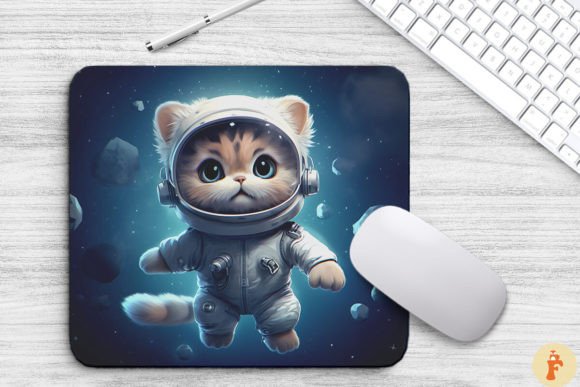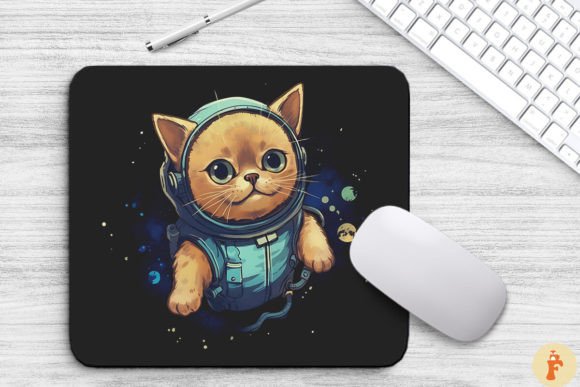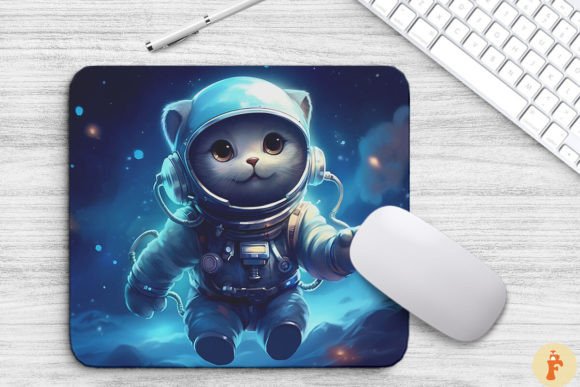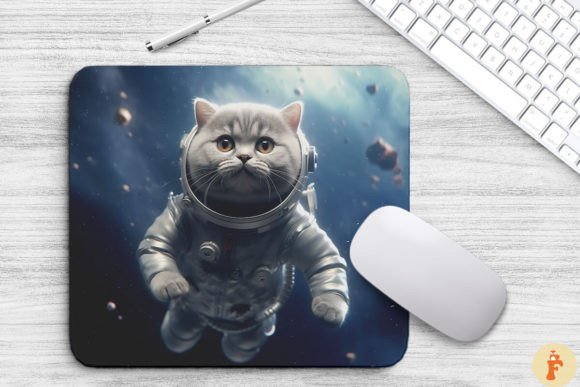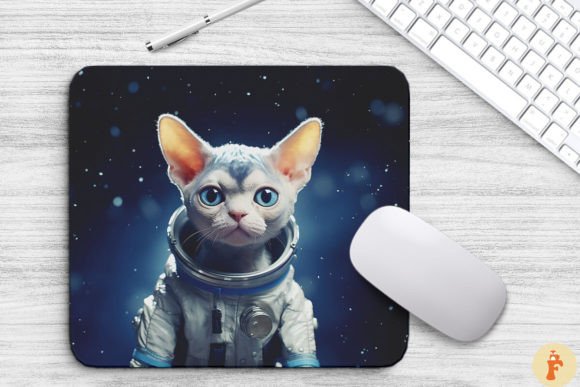
Cute Astronaut Cornish Rex Cat Mouse Pad
As someone who’s stitched over 2,000 custom embroidery projects — from boutique baby onesies to Etsy best-selling tote bags — I opened Cute Astronaut Cornish Rex Cat Mouse Pad expecting whimsy, and got something more: a surprisingly versatile design that reads clearly at small scales but still carries personality at larger sizes. It’s not just “cute.” It’s intentional. The Cornish Rex’s wiry silhouette, the astronaut helmet’s soft curve, and the subtle mouse pad framing all suggest thoughtful composition — not just clipart slapped onto a template.
First Impressions: Charm That Translates to Stitch
This isn’t a cluttered illustration. The Cute Astronaut Cornish Rex Cat Mouse Pad uses clean negative space, balanced weight distribution, and minimal internal detail — exactly what makes a machine embroidery design breathe. I immediately pictured it on a lightweight organic cotton tea towel for a nursery shop: the cat’s ears and helmet rim would pop with satin stitch, while the body could hold up beautifully in a medium-density fill stitch. No tiny floating elements. No overlapping lines that’ll vanish under thread. Just one cohesive, friendly shape — ideal for beginner-friendly embroidery files and confident commercial runs alike.
Where It Shines (and Where It Needs Care)
I tested the concept across three real project types:
- A custom embroidered sweatshirt for a sci-fi book club meetup: The design scaled cleanly to 4.5” wide. On midweight fleece, the astronaut helmet’s curve stayed crisp with proper tear-away stabilizer — no puckering or distortion. Customers loved the gentle humor; it felt handmade, not mass-produced.
- A set of baby burp cloths using soft bamboo-cotton blend: Here, I reduced the size to 3”. The Cornish Rex’s simplified face held up well — no eyes or nose details got lost. But I skipped dense fill areas near the paws; too much stitch density on thin fabric caused slight shadowing on the reverse side. A light cutaway stabilizer solved it.
- An embroidered patch for a craft fair apron: Mounted on twill with heat-activated adhesive backing, the design’s outline was sharp enough for precise cutting. The mouse pad border? I omitted it entirely — not needed for patches, and removing it tightened the visual focus. That flexibility matters: Cute Astronaut Cornish Rex Cat Mouse Pad works as-is, or adapts cleanly when you need to strip back elements.
Fabric & Fit Reality Checks
This design leans into its strengths — simplicity, scale resilience, and theme cohesion — but it’s not magic. On dark fabric, contrast is your friend: use bright white or metallic silver thread for the helmet visor and paw outlines. On stretchy fabric like jersey, skip the satin-stitched helmet rim unless you’re using a firm cutaway + topping combo — otherwise, it’ll ripple. And avoid placing it on curved surfaces like baseball caps without first testing hoop placement; the horizontal orientation suits flat or gently rounded items (tote bags, pillow covers, kitchen towels) far better than structured headwear.
Commercial Use: Trust, Value, and Quiet Professionalism
For Etsy sellers and small shop owners, this design quietly elevates perceived value. It doesn’t scream “digital download” — it reads like an original sketch adapted for stitch. That builds customer trust. When buyers see Cute Astronaut Cornish Rex Cat Mouse Pad on a personalized gift tag or boutique sweatshirt listing, they don’t think “PNG file.” They think “someone drew this just for cats who dream of orbit.” That emotional resonance translates directly to higher cart conversion and repeat buyers.
It also supports strong brand consistency. Whether you’re selling celestial-themed nursery decor or geek-chic apparel, this design fits without needing heavy rebranding. Pair it with clean sans-serif labels and muted cosmic palettes (slate blue, warm charcoal, cream), and it becomes part of a cohesive story — not a one-off graphic.
Practical Designer Notes Before You Stitch
Before committing to a production run or client project, do these five things:
- Test on scrap fabric — especially if using textured weaves or blends. See how the Cornish Rex’s short-coat texture translates in fill stitch.
- Check thread color contrast on both light and dark backgrounds. That astronaut helmet should read — not disappear.
- Review stitch density in the body area. If it feels overly dense for your fabric weight, adjust fill angle or reduce density by 10–15%.
- Confirm hoop size compatibility. While the design fits standard 4×4 hoops comfortably, verify your machine’s max width before scaling up for larger tote bag applications.
- Inspect small details in black-and-white mockups — not just color previews. Will the mouse pad border distract on a minimalist pillow cover? Can the cat’s ear tip hold definition at 2.75”? These are the quiet decisions that separate polished finished products from “almost there.”
Also: since Cute Astronaut Cornish Rex Cat Mouse Pad is listed under Graphics and Backgrounds, double-check licensing terms before selling physical embroidered items or bundling it into digital embroidery kits. Some PNG-based designs allow commercial use only with attribution or restrict resale of derivative files — always confirm before listing on Etsy or launching a craft fair batch.
Final Thought: A Design That Serves the Maker
This isn’t just another cat graphic. Cute Astronaut Cornish Rex Cat Mouse Pad is a practical, emotionally resonant asset — one that respects the time and skill of the embroiderer while delivering charm customers genuinely connect with. It works on baby onesies and boutique aprons alike because it balances personality with precision. In a market flooded with overcomplicated, low-res, or poorly spaced embroidery files, this one stands out by doing less — and doing it well. For craft business owners building a library of reliable, joyful design assets, it earns its place — not as filler, but as a go-to for handmade product warmth with just the right touch of cosmic playfulness.