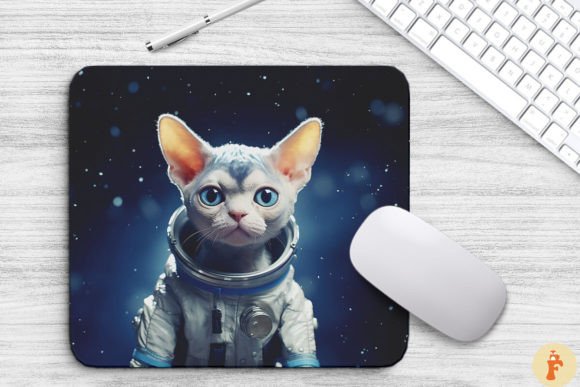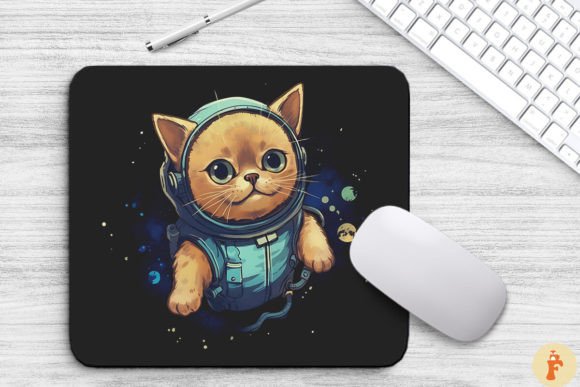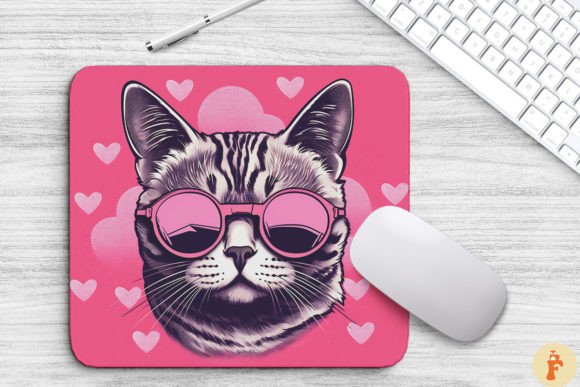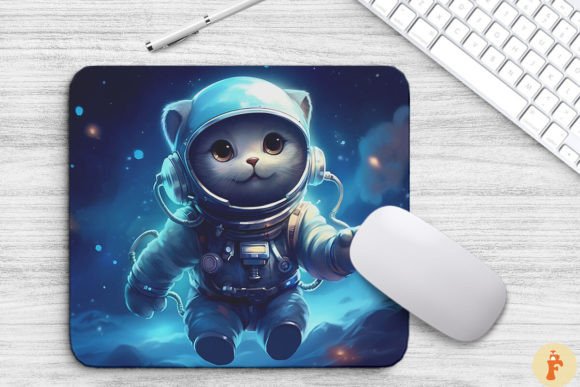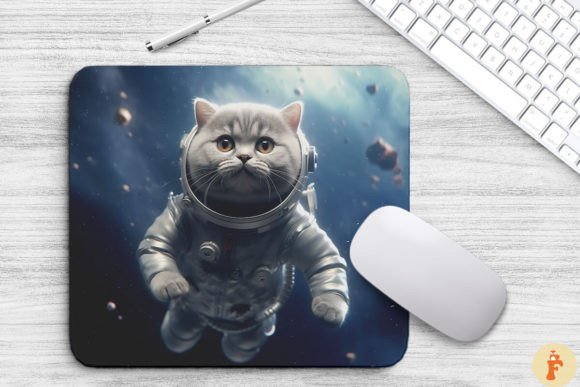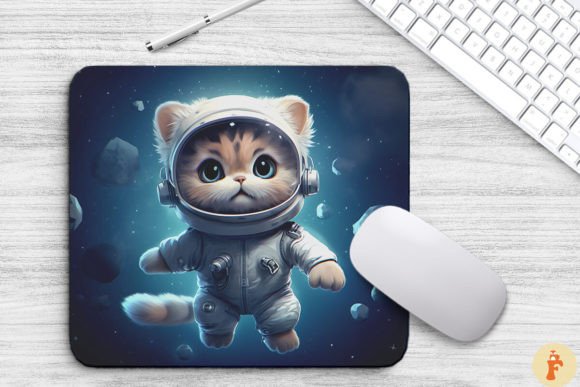
Cute Astronaut Persian Cat Mouse Pad
First Impression: Whimsy with Quiet Confidence
When I opened Cute Astronaut Persian Cat Mouse Pad, I didn’t see just another cat graphic—I saw a design that lands softly but sticks in memory. The Persian cat’s round face, wide-eyed curiosity, and tiny astronaut helmet sit comfortably centered, balanced by gentle curves and clean negative space. It’s not overly detailed—no intricate fur rendering or complex shading—but it carries strong visual personality: playful, tender, and quietly clever. That balance makes it feel like a natural fit for handmade products where charm matters more than photorealism.
A Real-World Test: Embroidering a Nursery Pillow Cover
Last week, I prepped this design for a custom embroidered pillow cover destined for a newborn’s nursery—a soft cotton-linen blend, medium-weight, with subtle texture. I chose Cute Astronaut Persian Cat Mouse Pad because its scale and simplicity translate well to 4–5 inch hoop work, and its theme fits both baby gifts and modern boutique branding. As I digitized the outline (yes—I always re-digitize mouse pad graphics for embroidery), I noticed how forgiving the shape is: smooth arcs hold up beautifully in satin stitch, the helmet’s dome reads clearly even at 3.2 inches wide, and the cat’s closed eyes avoid the “staring” effect that can creep into poorly scaled facial features.
Where It Shines—and Where It Needs Thought
- Custom apparel: Works cleanly on sweatshirts and structured tote bags—especially when placed on left-chest or center-front panels. Its compact footprint avoids bulk while still reading clearly from across a room.
- Baby embroidery: Ideal for onesies, bibs, and burp cloths—its soft theme and lack of fine lines mean fewer skipped stitches on delicate knits.
- Embroidered patches: Holds up well as a sew-on or iron-on patch; the clean outer edge gives clean cut lines and minimal fraying risk.
- Holiday & gift embroidery: Fits snugly on tea towels, kitchen aprons, and mini blankets—especially for cat lovers, space fans, or anyone who appreciates quiet wit over loud trends.
- Etsy & small shop use: As a digital embroidery file, it pairs easily with printable mockups—customers instantly “get” the vibe, which builds trust before they even click “add to cart.”
Fabric & Function: What to Watch For
Cute Astronaut Persian Cat Mouse Pad isn’t built for every surface. On highly textured fabrics like bouclé or heavy terry cloth, the subtle contours of the helmet and cat’s muzzle can blur—so I recommend testing on scrap first, especially if you’re using fill stitch instead of satin. On stretchy fabric (think lightweight jersey tees), stabilize generously—this design relies on shape integrity, and distortion in the helmet rim or eye placement breaks the illusion. And while it works on dark fabric, avoid ultra-dense thread colors unless you’ve confirmed stitch density won’t cause puckering; lighter thread on navy or charcoal often reads cleaner than black-on-black.
Curved surfaces—like caps or curved tote handles—are possible, but only if you reduce the design slightly (85–90%) and use a smaller hoop. The original layout assumes flat application, so corners and crowns need manual adjustment. Also: skip dense decorative accents around it—this design breathes best when it stands alone.
Design Integrity in the Handmade Context
As a designer who sells embroidery files and finished goods, I pay close attention to how a design affects perceived value. Cute Astronaut Persian Cat Mouse Pad elevates a simple item—not because it’s flashy, but because it feels intentional. A customer receiving a personalized baby blanket with this motif doesn’t just see “a cat”—they sense care, curation, and quiet storytelling. That translates directly to repeat buyers, social shares, and word-of-mouth referrals.
For Etsy sellers and craft fair vendors, it’s a smart inventory builder: one design, multiple applications—pillow covers, tea towels, enamel pins (using the PNG as a base), even sublimation mugs. But remember: since it’s listed under Backgrounds and Graphics, confirm licensing before bundling it into digital product kits or offering it as part of a commercial embroidery service. Always check whether resale of finished items is permitted—and whether the PNG includes transparent background (it should, given the description, but verify).
Practical Designer Notes Before You Stitch
- Test on scrap fabric *first*—especially if stitching on textured, dark, or stretchy material.
- Review stitch density: if your machine flags high-density areas, simplify small fill zones manually or reduce overall size slightly.
- Confirm hoop size compatibility—this design likely fits a 4x4 hoop comfortably, but double-check your digitized version.
- Inspect small details: the antenna tip, helmet seam, and ear outline should remain legible at your target size.
- Try black-and-white mockups: does the silhouette hold up? Does contrast stay strong on light and dark backgrounds?
- Use appropriate stabilizer—tear-away for stable wovens, cut-away for knits, and fusible for lightweight linens.
- Match thread colors thoughtfully: soft greys and creams read more “astronaut” than neon silver; warm taupes enhance the Persian cat’s plushness.
- Verify commercial use rights—especially if selling finished embroidered products or reselling the digital embroidery file.
Final Thought: A Design That Earns Its Place
Cute Astronaut Persian Cat Mouse Pad isn’t a trend-chasing graphic—it’s a thoughtful, adaptable piece of design assets. It doesn’t shout. It invites. And in a crowded market of handmade goods, that kind of quiet confidence is rare—and valuable. Whether you’re stitching a single holiday gift or building a cohesive line of nursery-themed embroidery projects, this design earns its spot not through complexity, but through clarity, charm, and real-world usability. Just treat it like the considered piece it is: test it, tune it, and let its personality speak for itself.