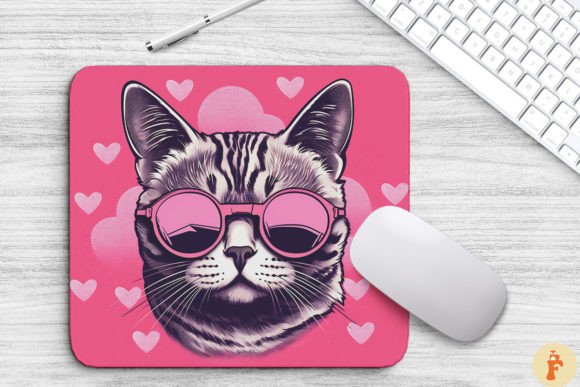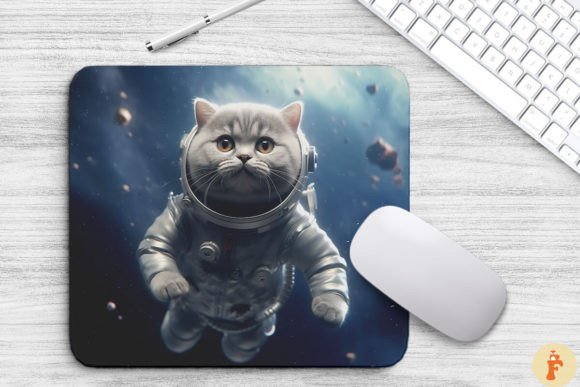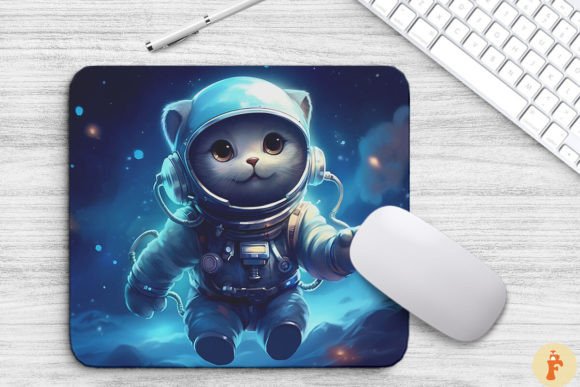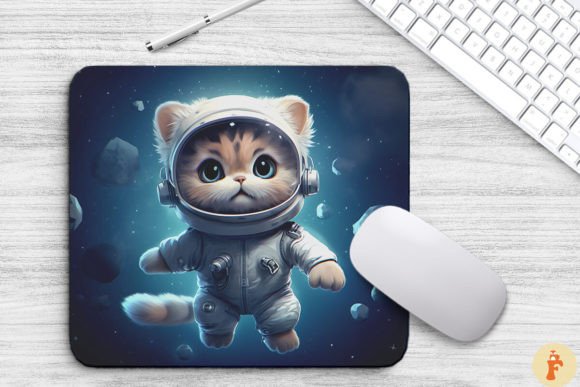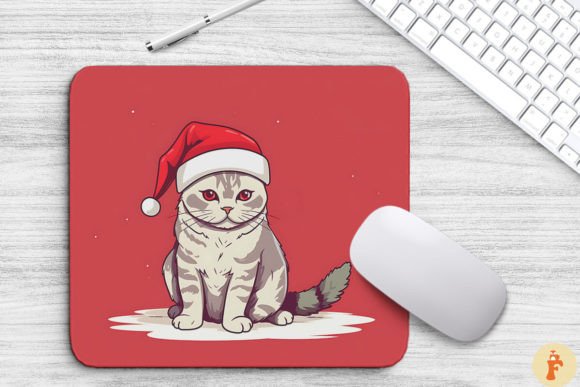
Kawaii Christmas American Shorthair Cat
First Impression: Sweet, Festive, and Instantly Recognizable
When I opened Kawaii Christmas American Shorthair Cat, my immediate thought was: “This is a holiday charm bomb.” It’s not just another cat-in-a-Santa-hat clipart—it’s a cohesive, expressive illustration with rounded cheeks, soft eyes, a tiny candy cane or bow, and gentle holiday motifs woven into its silhouette. The design leans into kawaii aesthetics without sacrificing clarity—clean outlines, balanced negative space, and intentional simplicity make it feel like a natural fit for embroidery, not just digital screens. As a designer who regularly sources graphics for embroidery files, I appreciate how the composition avoids overloading small zones: no micro-details in the paws, no tangled ribbons, no dense clusters that would translate poorly as fill stitch or satin stitch. That said, it reads as a background graphic first—meant to anchor a layout, not stand alone as a tiny pocket emblem.
A Real-World Test: Embroidering It on a Linen Tea Towel
Last week, I used Kawaii Christmas American Shorthair Cat for a limited-run batch of holiday kitchen towels for a local boutique. We chose medium-weight linen—textured but stable—and stitched it centered on the lower third, roughly 4.5" wide. The result? Warm, approachable, and unmistakably handmade. Customers didn’t just see “a cat”—they smiled at the *personality*: the sleepy Santa hat tilt, the little paw resting on a snowflake, the subtle blush on the cheeks. That emotional resonance matters more than technical perfection when you’re selling a personalized gift or small shop product. Because this is a graphics-based asset—not an engineered machine embroidery design—I had to digitize it myself. That gave me full control over stitch direction, underlay, and density—but also meant I needed to verify every curve held up at 10x scale before sending to the hoop.
Where It Shines (and Where It Needs Extra Care)
Kawaii Christmas American Shorthair Cat works beautifully on:
- Custom apparel like crewneck sweatshirts and relaxed-fit tees—especially when placed on the left chest or back yoke where its round shape echoes garment contours;
- Embroidered patches for kids’ backpacks or denim jackets—its bold silhouette reads clearly even at 3”;
- Baby embroidery on onesies and burp cloths—soft lines and zero sharp edges align perfectly with infant-safe aesthetics;
- Holiday gifts like pillow covers and ceramic mug wraps (when paired with printable mockups);
- Etsy listings for digital embroidery files—its theme has strong seasonal search volume and clear visual differentiation from generic reindeer or snowmen.
But caution is warranted on:
- Stretchy fabric like jersey knits—without proper cutaway stabilizer and reduced stitch density, those smooth curves can pucker;
- Dark fabric—the light-line details (like whiskers or tiny stars) may vanish unless digitized with contrasting thread or outlined in satin stitch;
- Curved surfaces like caps—its horizontal width demands careful hooping and possibly slight vertical compression to avoid distortion;
- Tiny hoop sizes (<3”)—scaling down risks losing legibility in the facial features, so test on scrap first;
- Frequent-wash items like kitchen towels or baby bibs—ensure your fill stitch density is tight enough to prevent snagging, and confirm thread colorfastness.
Design Integrity Meets Commercial Practicality
What sets Kawaii Christmas American Shorthair Cat apart isn’t novelty—it’s reliability. As a craft business owner, I need assets that reinforce brand consistency across products: same cheerful tone on a tote bag, an apron, and a holiday card bundle. This design delivers that. Its visual personality supports storytelling—“cozy,” “whimsical,” “thoughtful”—which builds customer trust faster than any product description. Buyers scanning an Etsy shop notice cohesion before they read specs. And because it’s rooted in backgrounds thinking, it layers well: pair it with simple text (“Merry & Bright”) or subtle snowflakes without visual competition. That flexibility makes it ideal for commercial embroidery jobs where clients want recognizable yet distinctive holiday branding.
Essential Designer Notes Before You Stitch
Before committing to production—or listing it as a digital embroidery file—do these five things:
- Test on scrap fabric matching your final substrate—linen behaves differently than cotton poplin, and fleece hides detail;
- Check thread color contrast by stitching a grayscale version first; what looks fine on screen may disappear on navy or charcoal;
- Review stitch density—if the original is vector-based (as implied by “Graphics”), avoid over-digitizing delicate areas like ear tips;
- Confirm licensing—since it’s marketed for sublimation and mouse pads, verify whether resale of finished embroidered goods is permitted;
- Compare light/dark mockups—this design gains warmth on cream but gains sophistication on deep green or burgundy.
Also, remember: Kawaii Christmas American Shorthair Cat isn’t built for photorealism. Its strength lies in expressive reduction—so lean into that. Simplify thread transitions, embrace slightly bolder satin borders, and let the charm carry the craft.
Final Thought: A Thoughtful Addition to Your Holiday Toolkit
This isn’t a “set-and-forget” embroidery file. It’s a starting point—a joyful, well-composed design asset that rewards thoughtful digitization and context-aware placement. Whether you’re prepping custom apparel for a holiday craft fair, building a cohesive handmade product line, or sourcing reliable holiday embroidery for client work, Kawaii Christmas American Shorthair Cat earns its place—not because it’s trendy, but because it stitches cleanly, sells warmly, and feels authentically handmade.