Cute Cat Playing Laptop Illustration
First Impressions: Charming, Clean, and Instantly Relatable
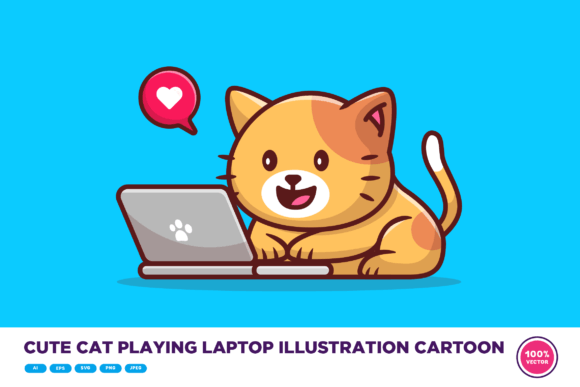
When I opened Cute Cat Playing Laptop Illustration, my first thought wasn’t “cute”—it was “usable.” As someone who’s stitched hundreds of designs across apparel, patches, and nursery items, I scan for clarity, rhythm, and embroidery-readiness before charm. This flat cartoon vector delivers both: a relaxed cat seated with paws on a simplified laptop, clean outlines, balanced negative space, and no fussy gradients or micro-details that vanish under thread. It reads well at 3–4 inches wide—the sweet spot for tote bags, sweatshirt chest placements, or baby onesie fronts. The mood is warm, playful, and quietly clever—not trying too hard, which makes it feel authentic in handmade contexts.
A Real-World Test: Embroidering This on a Linen Tea Towel
Last week, I prepped a batch of linen tea towels for a local café’s “Cat Lover’s Brunch” pop-up. I chose Cute Cat Playing Laptop Illustration for the front corner—small enough to avoid overwhelming the fabric, large enough to read clearly from across the counter. I used medium-weight cutaway stabilizer, 40-weight polyester thread, and kept stitch density moderate. What stood out? The cat’s rounded ears and laptop screen held shape beautifully—even on textured linen. No skipped stitches, no thread nesting. Customers loved it: one asked if the cat was “working remotely,” another said it made her smile every time she dried dishes. That’s the quiet power of this design—it lands emotionally *and* technically.
Where It Shines (and Where It Needs Care)
Cute Cat Playing Laptop Illustration works especially well for:
- Custom apparel: Sweatshirts, crewnecks, and unisex tees—its centered, upright posture avoids distortion on curved seams.
- Embroidered patches: Clean edges mean crisp satin-stitched borders; no jagged fill-stitch bleed on lightweight twill.
- Baby embroidery: Soft, non-gendered, and tech-adjacent without being literal—perfect for onesies, bibs, or crib mobiles.
- Holiday and gift embroidery: Great for “new grad,” “first remote job,” or “coffee & code” themed gifts—feels personal but not overly niche.
- Etsy listings and small shop products: Stands out in thumbnails, scales cleanly for printable mockups, and reads well in digital previews.
But be thoughtful where:
- Small hoop sizes (<4" diameter): The laptop keys and cat’s whiskers are minimal—but still legible at 2.5". Below that, test carefully. A 2" version may need simplification.
- Stretchy or thin fabric (like jersey or rayon challis): Use tear-away + light cutaway stabilizer. The design’s open shapes don’t pull fabric, but thread tension must be dialed in.
- Dark or dense fabrics (navy denim, charcoal fleece): Confirm contrast in your thread palette—light gray or cream works better than stark white for subtlety and durability.
- Curved surfaces (caps, beanies): Avoid placing the full design across the crown seam. Center it on the front panel instead.
- Frequent-wash items (kitchen towels, baby blankets): Stick with quality polyester thread and secure underlay. The flat style means fewer dense satin zones—less risk of wear-through.
What This Design Says About Your Brand—and Your Craft
Using Cute Cat Playing Laptop Illustration signals intentionality. It’s not generic clip art—it’s a curated illustration that balances personality and polish. For Etsy sellers, it elevates a basic tote bag into a conversation starter. For craft fair vendors, it adds wit to aprons or pillow covers without shouting. For boutique owners, it fits seamlessly into a cohesive “modern handmade” aesthetic—especially when paired with minimalist typography or neutral thread palettes. Customers notice that care. They trust it more. And yes—it boosts perceived value: people pay more for embroidered pieces that feel *designed*, not just decorated.
Practical Designer Notes Before You Stitch
Before committing to your next batch:
- Always test on scrap fabric—same type, same stabilizer, same thread colors you’ll use for the finished product.
- Check thread color contrast in natural light *and* on camera. A soft peach cat on oatmeal linen looks warm in person but can fade in photos.
- Review stitch density. Flat cartoon vectors often translate to lighter fills—ideal for breathable fabrics—but verify no gaps appear in the laptop screen or ear contours.
- Confirm hoop size compatibility. If you’re using a 5×7 hoop, this design fits comfortably—but double-check spacing if layering with text.
- Inspect small details: Are the cat’s eyes distinct? Does the laptop hinge read as a line or a blob? Zoom in on your embroidery software preview.
- Test black-and-white mockups. If it reads clearly without color, your stitch execution will be forgiving.
- Compare light vs. dark backgrounds. Some flat vectors lose definition on low-contrast combos—this one holds up well, but verify.
- Use proper stabilizer. Medium-weight cutaway remains my go-to for most applications—especially on textured or loosely woven fabrics.
- Confirm licensing. Since Cute Cat Playing Laptop Illustration is listed as a premium vector graphic, review its terms before selling finished embroidered items or bundling it into digital embroidery files.
Final Thought: A Quietly Versatile Workhorse
This isn’t a flashy, trend-chasing icon. It’s a steady, expressive, and surprisingly flexible piece of design assets—ideal for makers who value clarity over clutter. Whether you’re embroidering a personalized gift for a coder friend, launching a small shop line of tech-themed kitchen goods, or building a consistent visual language for your craft business, Cute Cat Playing Laptop Illustration earns its place in your library. It stitches cleanly, sells thoughtfully, and feels genuinely human—right down to the cat’s slightly tired, deeply relatable expression. That’s rare. And worth keeping.