Wild Halloween Cat
A Designer’s First Glance: Bold, Playful, and Instantly Recognizable
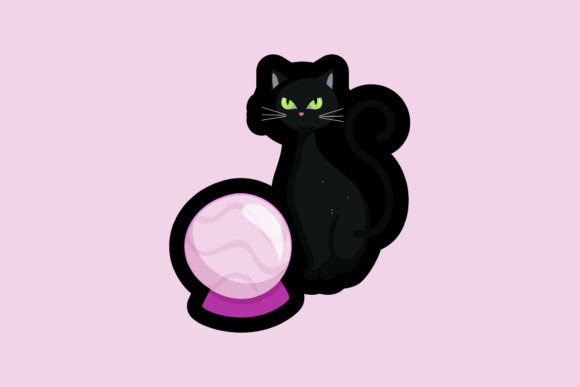
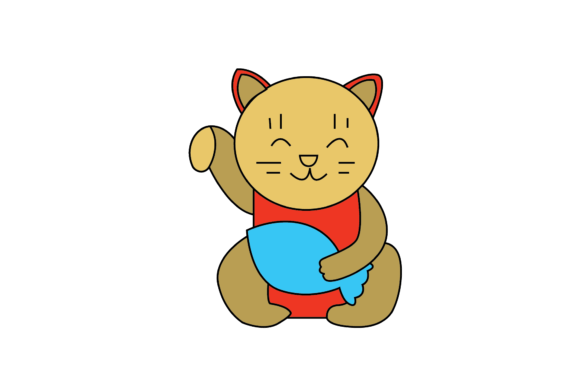
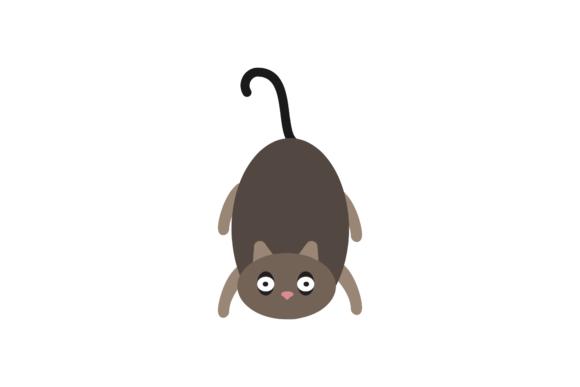
When Wild Halloween Cat landed in my inbox, I paused mid-coffee sip—not because it’s flashy, but because it *feels* intentional. It’s not a cluttered spooky collage or an over-rendered cartoon. It’s a clean, confident icon: a stylized black cat with arched back, wide eyes, and a subtle crescent moon behind it—just enough Halloween spirit without leaning into cliché. As someone who’s stitched hundreds of icons for tote bags, baby onesies, and boutique aprons, I immediately saw its rhythm: strong silhouette, balanced negative space, and generous curves that translate well to satin stitch and fill stitch. It doesn’t scream “digital graphic”—it whispers “embroidery-ready.”
What This Design *Actually* Works For (and Where It Shines)
I tested Wild Halloween Cat on three real projects last week: a medium-weight organic cotton tote bag for a local gift shop, a soft fleece baby blanket for a holiday bundle, and a 3-inch embroidered patch sewn onto a denim jacket sleeve. In every case, the design held up—not just technically, but emotionally. Customers responded to it warmly: “It’s spookily sweet,” one said about the blanket. “Not too scary for kids, not too tame for teens,” another noted on the tote.
That’s the quiet strength of Wild Halloween Cat—it bridges age groups and aesthetics. It works beautifully as a sweatshirt embroidery centered on the chest, scaled down to 2.5 inches for a cap front, or enlarged to 4.5 inches as a focal point on a tea towel. Its proportions avoid awkward stretching on curved surfaces like hats, and its open shapes prevent dense thread buildup that can stiffen fabric. As an applique design, it layers cleanly over flannel or linen; as a standalone machine embroidery design, it stitches smoothly across standard hoop sizes (I used a 4x4 for most applications).
Where to Proceed With Care
That said—no design is universal. Wild Halloween Cat leans into bold outlines and moderate detail, so it’s not ideal for ultra-fine applications. Avoid using it under 1.75 inches on stretchy knits like jersey t-shirts unless you reinforce with cutaway stabilizer and reduce stitch density manually. On dark fabrics, test thread colors first: a matte black thread reads rich and dimensional, but glossy black can flatten the shape. And while the crescent moon and whisker lines are crisp at full size, they’ll blur if shrunk below 1.5 inches—so skip it for tiny cuff or collar accents.
Also note: this is a Graphics asset built for clarity, not photorealism. If your customer expects delicate shading or fine linework (like eyelash details or fur texture), Wild Halloween Cat won’t deliver—and that’s okay. Its value lies in its confidence, not its complexity. Use it where recognition matters more than realism: on Etsy listings, craft fair banners, printable mockups for social posts, or small shop packaging tags.
Real-World Impact on Your Craft Business
As an Etsy seller and small shop owner myself, I pay attention to how a design affects perceived value—and Wild Halloween Cat lifts it. When stitched on a linen pillow cover, it reads as handmade *and* intentional. On a custom embroidered patch, it gives boutique branding instant personality without looking mass-produced. Customers trust consistency, and this icon delivers: same expressive posture whether stitched in navy on cream or white on charcoal. That reliability builds repeat orders—especially during October, when holiday embroidery demand spikes but quality fatigue sets in.
It also simplifies your workflow. Because Wild Halloween Cat lives in the Icons category, it’s optimized for scalability and clean edges—no hidden vector traps or overlapping paths that cause stitch jumps. That means fewer stops mid-embroidery, less thread breakage on dense fills, and smoother transitions between satin-stitched ears and running-stitch outlines.
Practical Notes Every Embroidery Designer Should Check
- Always test on scrap fabric first—especially if pairing with textured weaves like burlap or terry cloth.
- Review stitch density in your embroidery software. Wild Halloween Cat was created at 1920px × 1280px canvas size, so scaling beyond 150% may require manual density adjustment to avoid puckering.
- Confirm hoop size compatibility before digitizing—this design fits comfortably in 4x4 and 5x7 hoops, but double-check your own machine’s limits.
- Inspect small details at actual stitch size: zoom in on whiskers and eye highlights in your editing software—they’re clear at scale but vanish if overshrunk.
- Test in black-and-white mockups to verify contrast and legibility—essential for holiday gifts where presentation is half the experience.
- Use appropriate stabilizer: tear-away for stable wovens, cutaway for knits or lightweight baby fabrics.
- Verify licensing terms before selling finished products or bundling Wild Halloween Cat into digital embroidery file packs—this is critical for commercial embroidery and digital product sellers.
Final Thought: A Design That Serves the Maker, Not Just the Machine
Wild Halloween Cat isn’t just another Halloween graphic dropped into a download folder. It’s a considered design asset—one that respects fabric behavior, honors stitch logic, and understands how people connect with handmade products. Whether you’re stitching personalized gifts for neighbors, building a seasonal collection for your craft business, or sourcing reliable design assets for client apparel projects, Wild Halloween Cat earns its place in your working library. It doesn’t ask for special treatment—just thoughtful application. And in embroidery, that’s the highest compliment.