Salad Loving Cat Quirk Sublimation
A Designer’s First Glance: Whimsy with Purpose
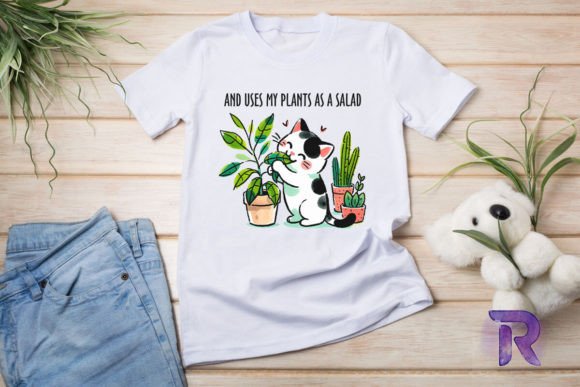
When Salad Loving Cat Quirk Sublimation landed in my inbox, I paused—not because it’s flashy, but because it’s disarmingly specific. A cat mid-bite into a crisp lettuce leaf, eyes half-lidded with culinary bliss, whiskers slightly askew. It’s not just cute; it’s character-driven. The linework is clean, the proportions balanced for small-scale impact, and the negative space around the cat feels intentional—not empty, but breathing. As a designer who’s stitched hundreds of motifs onto everything from organic cotton onesies to heavyweight denim tote bags, I immediately asked: *Where does this live best? And where might it stumble?*
Real Project Test: Embroidering a Kitchen Towel for a Local Boutique
Last week, I prepped a batch of linen-cotton tea towels for a neighborhood kitchen boutique—part of their “Whimsy & Whiskers” spring collection. I chose Salad Loving Cat Quirk Sublimation as the hero motif for three reasons: its food-and-pet crossover appeal, its compact footprint (ideal for a 4×4 hoop), and its visual clarity at 3–4 inches wide. On the towel, it stitched cleanly with minimal fill stitch density—no puckering, no thread nesting. The satin stitch outlining the cat’s ear and paw held shape beautifully, and the subtle leaf veins read well without overwhelming the fabric texture. Customers loved the gentle humor—it felt handmade, not mass-produced.
Where This Design Shines—and Where It Needs Care
Salad Loving Cat Quirk Sublimation thrives on stable, medium-weight fabrics: canvas tote bags, structured aprons, cotton sweatshirts, and pillow covers. Its charm lies in restraint—it doesn’t rely on dense fills or micro-details, so it translates reliably across embroidery machines and skill levels. As a machine embroidery design, it’s forgiving on beginner-friendly hoops and holds up in commercial embroidery batches.
But let’s be real: it’s not universal. Avoid using it on ultra-thin baby onesies without testing stabilizer layers first—the delicate stem of the lettuce could lose definition. On stretchy jersey t-shirts, you’ll want a cutaway stabilizer and possibly slight digitizing tweaks to prevent distortion. Curved surfaces like caps? Proceed with caution: the cat’s rounded silhouette may compress awkwardly near the crown unless resized thoughtfully. And while it works fine on dark fabric, test your thread colors—lime green or butter yellow on black can mute the salad’s freshness unless contrast is dialed in.
Design Assets That Build Trust
This isn’t just a graphic—it’s a quiet signal of intention. When an Etsy seller uses Salad Loving Cat Quirk Sublimation on a personalized gift, customers don’t just see a cat. They see wit, care, and a nod to wellness culture without cliché. That builds trust faster than any product description. For small shop owners, it adds personality to otherwise functional items—like turning a plain cotton apron into a conversation starter at a farmers’ market. As a digital embroidery file, it supports brand consistency across product lines: same motif on a patch, a tea towel, and a holiday ornament feels cohesive, not repetitive.
Practical Notes Every Embroidery Designer Should Check
- Test first—Always run Salad Loving Cat Quirk Sublimation on scrap fabric matching your final project’s weight and weave.
- Review stitch density—It’s moderate, but if you’re layering it over textured embroidery (like a cross-stitch border), confirm spacing won’t cause thread buildup.
- Confirm hoop size compatibility—While it fits comfortably in a 4×4 hoop, double-check the file’s actual dimensions before scaling for larger applications like blanket corners.
- Inspect small details—The cat’s tail tip and lettuce stem are fine but legible; avoid shrinking below 2.5 inches unless you’ve verified clarity on your machine.
- Try black-and-white mockups—This design relies on shape and gesture more than color, so grayscale previews reveal how well it reads on varied backgrounds.
- Use proper stabilizer—Lightweight tear-away works for stable fabrics; switch to cutaway for knits or loosely woven linens.
- Licensing matters—Since it’s labeled as a Graphics file under T-Shirt Designs, verify whether commercial use (e.g., selling finished embroidered patches) is permitted before listing on Etsy or wholesale platforms.
Beyond the Stitch: What This Design Says About Your Craft Business
Using Salad Loving Cat Quirk Sublimation thoughtfully tells your audience you understand nuance—that humor can be gentle, that food-themed designs don’t need chef hats or cartoon tomatoes, and that a single embroidered motif can carry warmth, identity, and quiet confidence. It’s ideal for craft fair booths where shoppers scan quickly; it stops them. It’s equally strong in digital product listings—paired with a clean printable mockup, it sells itself as both a handmade product and a smart design asset.
For embroidery designers building a library of reliable files, this one earns shelf space not because it’s trendy, but because it’s versatile without being generic. It doesn’t shout. It winks—and that’s exactly why it works.