Pretty Witch with Books Black Cat
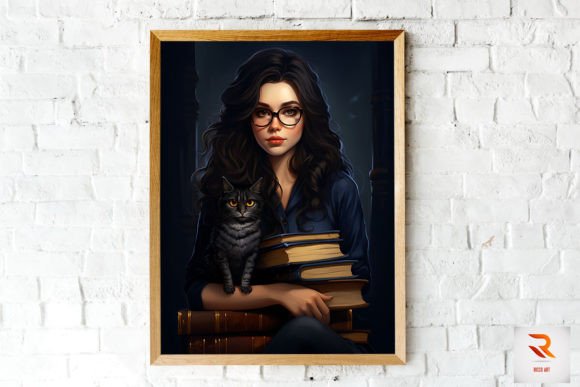
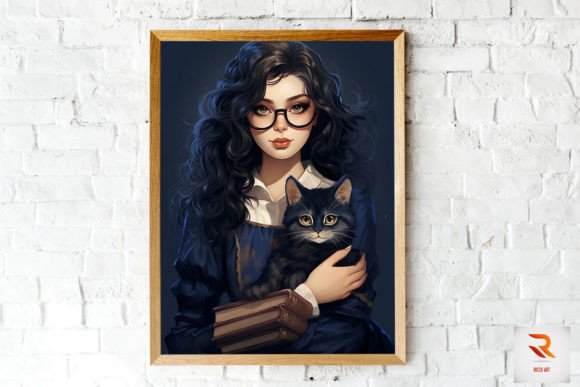
As someone who’s stitched hundreds of designs for clients—from boutique baby onesies to Etsy-ready embroidered patches—I opened Pretty Witch with Books Black Cat expecting charm, but what I found was something more nuanced: a strong visual anchor with quiet storytelling power. It’s not just a “witchy” graphic; it’s a composed, balanced composition built around soft curves, intentional negative space, and layered narrative elements—the witch’s gentle posture, the stacked books, the cat’s relaxed silhouette. At first glance, it reads as warm, whimsical, and quietly confident—not spooky, not cutesy, but authentically *crafted*. That matters when you’re turning pixels into thread.
What This Design Wants to Be (and Where It Shines)
I tested Pretty Witch with Books Black Cat as the centerpiece for a custom linen tea towel—hand-stitched mockup first, then machine-embroidered on medium-weight cotton twill. The result? Instant cohesion. The design’s vertical orientation and generous breathing room around the figures made hooping intuitive, and its central focal point translated cleanly into satin and fill stitch without visual crowding. It’s ideal for products where clarity and character coexist: embroidered pillow covers for a nursery, minimalist sweatshirt fronts for indie bookshops, or boutique aprons for herbalists and candle makers. As a Backgrounds asset, it holds up beautifully in large-scale applications—think framed hoop art or wall-hanging panels—but its strength lies in being *foreground-ready*: bold enough to stand alone, detailed enough to reward closer looking, and restrained enough to avoid overwhelming delicate fabrics.
Real-World Embroidery Behavior: What Works (and What Needs Caution)
In practice, Pretty Witch with Books Black Cat performs best when treated like a thoughtful collaborator—not a plug-and-play file. On stable fabrics like denim, canvas, or midweight cotton, its proportions hold. The books’ subtle texture and the cat’s fur contour read clearly in fill stitch at 4–5" tall, and the witch’s flowing hair translates well with gentle satin stitch gradients. It’s especially effective on tote bags and kitchen towels, where the vertical flow guides the eye naturally from handle to hem or corner to corner.
That said, this isn’t a design for tight spaces or high-risk substrates. Its 3712 x 4928 pixel size signals detail—and detail demands real estate. Avoid using it full-size on curved surfaces like caps or small hoop projects under 5"; corners will compress, fine lines may blur, and dense fill areas (like the cat’s ears or book spines) risk puckering without proper stabilizer. On thin or stretchy fabric—think baby onesies or lightweight tees—test stitch density carefully. You’ll want lighter underlay and possibly reduced fill density to prevent stiffness or distortion. And while the PNG gives flexibility, remember: this is a digital embroidery file only after conversion—so confirm your digitizer understands how to translate those smooth outlines and layered silhouettes into clean stitch paths.
Where It Builds Trust—and Where It Could Undercut It
Customers notice intentionality. When a client orders a personalized gift—say, a baby’s first Halloween towel with their name stitched beneath Pretty Witch with Books Black Cat—the design’s calm, inclusive vibe reinforces warmth and care. It doesn’t shout; it invites. That elevates perceived value, especially for handmade product buyers who associate refined composition with skilled craftsmanship. For Etsy sellers and small shop owners, that means better conversion on listings with clean mockups, stronger repeat engagement, and fewer “looks different than expected” messages—because the design’s mood is consistent across fabric types and sizes.
But inconsistency starts with assumptions. If you skip testing on your actual fabric—or ignore how thread color contrast shifts on dark backgrounds—you risk muddying the witch’s expression or losing the cat’s outline entirely. A light gray thread on navy fabric might vanish where you need definition most. Likewise, over-stabilizing can flatten the design’s organic feel; under-stabilizing risks skipped stitches in the books’ narrow spines. This isn’t a “set and forget” embroidery file—it’s a design asset that earns its place through attention.
Practical Designer Notes Before You Stitch
- Always test on scrap fabric first—especially if using textured weaves or blends. Linen, terry cloth, and fleece behave very differently under needle and thread.
- Check thread color contrast early. Print a grayscale version of the PNG and hold it against swatches of your intended fabric. Does the cat still read as distinct? Do the books retain separation?
- Review stitch density in your embroidery software. High-density fills work on stable fabrics but can overwhelm lightweight or delicate items. Adjust where needed—not just globally, but per element.
- Confirm hoop size compatibility. At native resolution, this design fits comfortably in 6x10" or larger hoops. For smaller formats, resize thoughtfully—not just proportionally, but with stitch path integrity in mind.
- Inspect small details at 200% zoom: eyelashes, book titles (if legible), paw pads, and hair strands. These define personality—and vanish if digitized too loosely.
- Test black-and-white mockups before finalizing. Many buyers visualize embroidery in monochrome first—does the shape still communicate clearly without color cues?
- Use appropriate stabilizer: cutaway for knits, tear-away for stable wovens, and lightweight fusible for sheer layers. Don’t assume one type fits all.
- Verify licensing before selling finished items or digital products. Since only a PNG is included, confirm whether commercial use is permitted for both physical goods and resale of digitized versions.
Pretty Witch with Books Black Cat isn’t flashy—but it’s dependable. It fits seamlessly into holiday embroidery collections, nursery decor lines, and craft fair merchandise without leaning on trend-chasing tropes. As a Graphics asset, it bridges illustration and function: expressive enough for branding, structured enough for production. Whether you’re prepping a batch of embroidered patches for a local bookstore or designing a limited-run holiday sweatshirt collection, this design earns its place by doing one thing exceptionally well: holding space—visually, emotionally, and practically—for the maker and the person who receives the finished product.