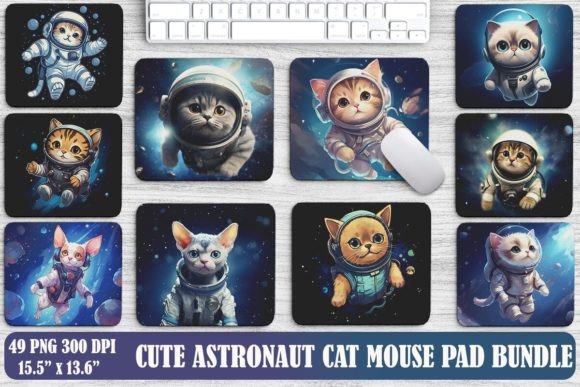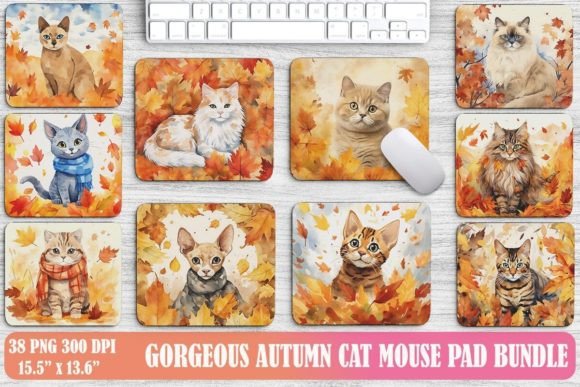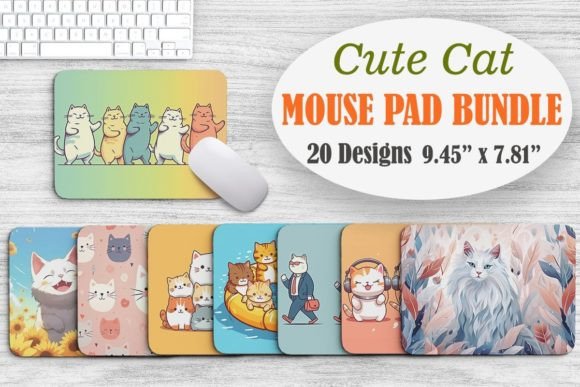
Cute Cat Mouse Pad Design Bundle
First Impression: Playful, Polished, and Purpose-Built for Charm
When I opened the Cute Cat Mouse Pad Design Bundle, what struck me wasn’t just the cuteness—it was the intentionality. Twenty JPG files, all sized around 9.45 × 7.81 inches at 300 DPI, immediately signaled this wasn’t a grab-bag of clipart. It’s a curated set built for visual impact—and that matters when you’re translating digital charm into stitched reality. The cats are expressive but not overly fussy: rounded ears, soft eyes, gentle curves, and clean outlines. No tiny whiskers or micro-details that vanish under thread. That tells me this bundle leans into readability over realism—smart for embroidery.
A Real-World Test: Turning It Into a Handmade Tote Bag for My Local Boutique
Last week, I used one of the designs from the Cute Cat Mouse Pad Design Bundle to embroider a linen-cotton tote for a small shop launch. I chose a mid-sized cat motif (about 7.5 inches wide) centered on the front panel. On fabric, it held up beautifully—not too dense, not too sparse. The proportions scaled cleanly down without losing shape integrity, and the negative space around each cat gave the stitching room to breathe. Customers loved how “handmade but polished” it felt—not childish, not sterile, just warmly intentional. That’s the sweet spot this bundle hits: approachable personality with professional restraint.
Where It Shines in Real Embroidery Projects
- Custom apparel: Works especially well on sweatshirts and relaxed-fit tees—the scale fills space without overwhelming, and the simplified forms avoid stitch pile-up on knits.
- Tote bag design & aprons: Large enough to read at arm’s length, yet balanced enough to sit comfortably beside text or branding elements.
- Baby embroidery & nursery decor: Soft shapes and friendly faces translate naturally to onesies, pillow covers, and tea towels—no sharp edges or aggressive contrast to clash with delicate themes.
- Embroidered patch & cap projects: While the full 9.45-inch layout is too big for most caps, several motifs resized cleanly to 3–4 inches—ideal for clean, bold patches or front-panel cap embroidery.
- Holiday embroidery & personalized gifts: Pair a cat holding a tiny wreath or bow (if included in the bundle) with neutral thread for subtle seasonal flair—no kitsch, just quiet warmth.
Where to Use It Thoughtfully
This isn’t a one-size-fits-all embroidery file. Its strengths lie in clarity and scale—but that means certain contexts need extra attention:
- Small hoop sizes: The full layout won’t fit standard 4×4 hoops. Resize intentionally—or cherry-pick individual cats from the bundle that scale down gracefully.
- Textured or stretchy fabric: Linen blends and cotton jerseys work well, but avoid dense fill-stitch areas on highly textured weaves unless you reinforce with medium-cutaway stabilizer.
- Dark fabric: Since these are JPGs—not vector or DST files—you’ll need to adjust thread colors manually. Test contrast early: light grays and creams pop nicely on navy or charcoal, but avoid pale yellows or pastels unless you’re using high-sheen thread.
- Curved surfaces like caps or sleeves: Stick to simpler silhouettes from the bundle. Avoid motifs with fine interior linework—they’ll blur or skip on uneven tension.
- Frequent-wash items (baby clothes, kitchen towels): Confirm stitch density feels substantial—not flimsy—before committing. A quick test stitch on scrap fabric, then a gentle wash-and-dry cycle, saves heartache later.
What It Adds to Your Craft Business—and What It Doesn’t Promise
The Cute Cat Mouse Pad Design Bundle elevates perceived value without demanding advanced digitizing skills. When used thoughtfully, it helps Etsy sellers communicate care and consistency; small shop owners reinforce brand warmth; and craft fair vendors stand out with cohesive, recognizable charm. Customers notice when stitching looks *considered*—not just applied. That trust builds repeat sales.
But let’s be clear: this is a design asset, not a production shortcut. You still need to choose thread colors that harmonize, select stabilizer based on fabric behavior, and verify how the design reads in both light and dark mockups. It won’t auto-optimize for your machine or fabric—so treat it like raw material, not finished output.
Practical Designer Notes Before You Stitch
- Always test the design on scrap fabric first—especially if pairing with textured or lightweight materials.
- Review stitch density visually: look for areas where fill stitches might crowd or run thin. Adjust if needed before hooping.
- Confirm your hoop size matches your intended layout—or resize proactively, not reactively.
- Inspect small details (like paws or tail tips) at actual stitch size—what looks crisp on screen may fuzz on fabric.
- Try a black-and-white mockup: does the shape hold up without color? If yes, it’s versatile.
- Compare light and dark fabric backgrounds digitally—then verify with thread swatches.
- Use appropriate stabilizer: tear-away for stable wovens, cut-away for knits or lightweight fabrics.
- Check licensing terms carefully—this bundle contains JPGs only, so digitizing for machine use or resale as an embroidery file requires your own conversion and rights verification.
Final Thought: A Reliable Spark, Not a Finished Answer
The Cute Cat Mouse Pad Design Bundle doesn’t try to be everything. It’s a focused, mood-driven collection—designed for makers who want to infuse personality without sacrificing polish. It fits seamlessly into handmade product lines, boutique merchandise, and thoughtful gifting—especially when paired with smart execution. As a designer and reviewer, I keep it in my go-to folder for projects where warmth, clarity, and quiet confidence matter more than flash. Just remember: great embroidery starts with great judgment—not just great files.