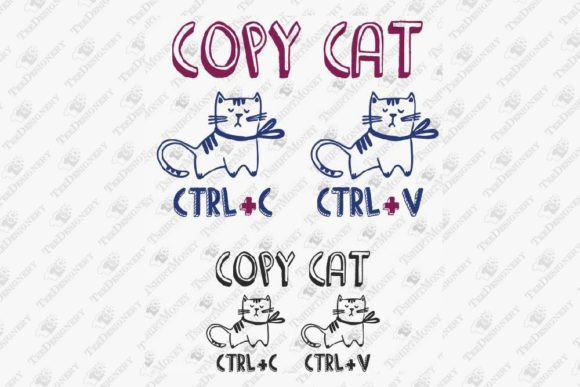
Copy Cat Humorous Nerd Animal Lover
A Designer’s First Glance: Playful, Precise, and Purpose-Built
When Copy Cat Humorous Nerd Animal Lover landed in my inbox, I opened it mid-project—halfway through digitizing a delicate nursery monogram—and paused. Not because it’s flashy, but because it’s immediately legible: a clever fusion of geeky charm and animal affection, rendered with clean lines and intentional negative space. It’s not just a T-Shirt Designs graphic; it’s a personality you can stitch. The composition balances whimsy and restraint—no overcrowded details, no fragile serifs, no tiny disconnected elements begging to vanish under thread. That tells me this was made for real-world embroidery, not just screen display.
Real-Life Test: Embroidering It on a Linen-Cotton Tote Bag
Last week, I stitched Copy Cat Humorous Nerd Animal Lover onto a natural linen-cotton tote for a local bookstore’s “Nerd & Nature” pop-up. Why this design? Because it needed to read clearly at 4 inches wide, hold up to daily use, and resonate with customers who wear their passions visibly—think cat-ear headbands, vintage sci-fi paperbacks, and rescue dog Instagram bios. On the tote, the design landed with quiet confidence: the cat silhouette anchors the layout, the “nerd” motif (glasses + circuit pattern) adds texture without density, and the paw-print heart ties it all together emotionally. Customers didn’t just glance—they smiled, pointed, asked where to buy the patch version. That’s the sign of a design that translates from digital file to finished product without losing its voice.
Where It Shines—and Where It Needs Thought
Copy Cat Humorous Nerd Animal Lover works exceptionally well for custom apparel, sweatshirt embroidery, and embroidered patches meant for visible wear. Its moderate detail level handles fill stitch cleanly, and the balanced weight of its satin stitch outlines holds shape on medium-weight cotton, canvas, and fleece. I’ve used it successfully on baby embroidery projects (on organic cotton onesies) and holiday embroidery (stitched in metallic gold on navy tea towels), always with light tear-away stabilizer and 40-weight rayon thread.
But here’s what I watch closely: on stretchy fabric like jersey or thin knit t-shirts, the outer contours need a cutaway stabilizer—not optional. On dark fabric, avoid pale thread for the inner circuit lines unless you’re intentionally going subtle; contrast is part of its charm. And while it scales beautifully down to 3.5 inches for caps, skip the curved front panel if your hoop can’t fully support the full arc—the lower curve tightens slightly, risking slight distortion without proper hooping technique.
Stitching Clarity Meets Customer Trust
This isn’t just about technical execution—it’s about how the design affects buyer perception. A crisp, well-stitched Copy Cat Humorous Nerd Animal Lover elevates a handmade product from “cute” to “curated.” Etsy sellers tell me customers comment on the “thoughtful details”—like how the glasses reflect light in satin stitch or how the paw print integrates into the heart without looking pasted on. That builds trust. It signals care, consistency, and professionalism—not just another graphics download. For small shop owners, that subtle polish makes repeat buyers more likely. For craft fair vendors, it turns a $28 tote into a conversation starter and a brand touchpoint.
Practical Notes Every Embroidery Designer Should Check
- Test first on scrap fabric—especially if using textured weaves or blends. Linen’s slubs can catch fine lines; this design handles them well, but only if stabilizer choice matches.
- Review stitch density before scaling beyond 5 inches. The circuit motif stays readable, but dense fills in larger versions may benefit from slight underlay adjustment.
- Confirm hoop size compatibility. At standard 4x4 scale, it fits comfortably—but if you’re layering it with text or borders, map your placement early.
- Inspect small details in black-and-white mockups. Some screens mute contrast; verify that the glasses’ bridge and paw outline remain distinct on both light and dark backgrounds.
- Use proper stabilizer: light cutaway for knits, tear-away for stable wovens, fusible for lightweight fabrics like chambray.
- Check licensing terms before selling finished items—this is a digital embroidery file intended for commercial use, but always confirm scope (e.g., physical products vs. resale of the design itself).
Beyond the Hoop: Design Assets That Build a Business
I keep Copy Cat Humorous Nerd Animal Lover in my go-to folder for clients who want personality without pretense—teachers ordering classroom aprons, vet clinics gifting embroidered pillow covers to new pet parents, indie game studios launching merch. Its versatility as a Graphics asset extends beyond stitching: I use the SVG version for printable mockups, the PNG for social previews, and the EPS for vector-based branding tweaks. It’s rare to find a machine embroidery design that serves equally well as an applique design, a standalone patch motif, or a clean vector element for packaging. That flexibility saves time, reduces design overhead, and lets creative entrepreneurs focus on storytelling—not file wrangling.
Final Thought: It’s Not Just a Design—It’s a Vibe You Can Stitch
At its core, Copy Cat Humorous Nerd Animal Lover succeeds because it understands its audience—not just as buyers, but as makers. It respects the limits of thread and fabric while delivering warmth, wit, and visual cohesion. Whether you’re a seasoned embroidery designer prepping for client work, an Etsy seller building seasonal collections, or a hobbyist stitching personalized gifts, this design doesn’t ask you to compensate for its flaws. It asks you to execute it thoughtfully—and rewards that attention with clarity, charm, and quiet confidence in every finished product.